Buy leituras.eu ?
We are moving the project
leituras.eu .
Are you interested in purchasing the domain
leituras.eu ?
domain@kv-gmbh.de · 0541-91531010
Buy leituras.eu ?
Are non-fiction books literature?
Non-fiction books can be considered literature because they are written works that convey information, ideas, and perspectives in a creative and artistic way. While they may not be works of fiction, non-fiction books still require skillful writing, research, and storytelling to engage readers and provoke thought. Many non-fiction books are highly regarded for their literary merit and impact on society, making them an important part of the literary landscape. **
How can reducing and non-reducing sugars be detected?
Reducing sugars can be detected using Benedict's test, in which the reducing sugar is heated with Benedict's reagent and a color change from blue to green, yellow, orange, or red indicates the presence of reducing sugars. Non-reducing sugars can be detected by first hydrolyzing them into reducing sugars using acid hydrolysis, and then performing the Benedict's test to detect the presence of reducing sugars. Another method to detect reducing and non-reducing sugars is through chromatography, where the sugars are separated based on their interactions with a stationary phase and a mobile phase, and then visualized using specific detection methods. **

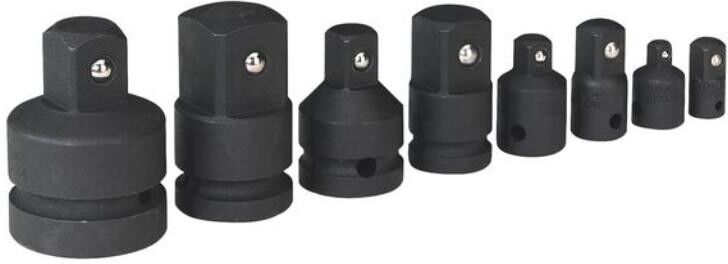
Similar search terms for AMiO-04781-Increasing-Reducing
Top-Angebote
Products related to AMiO-04781-Increasing-Reducing:
-
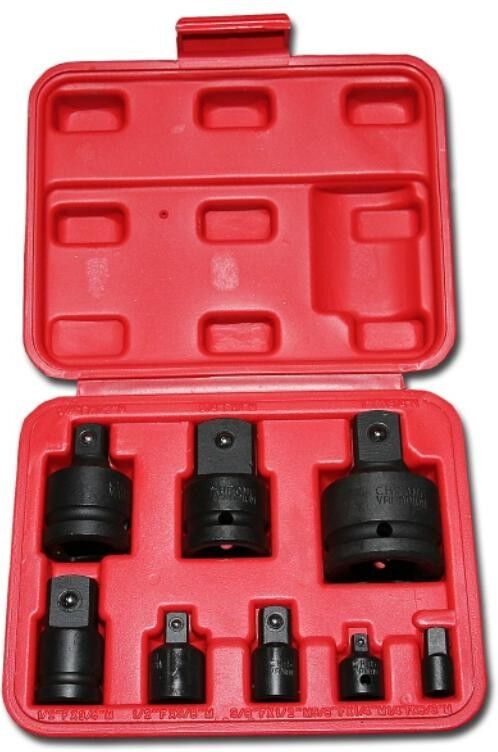
FORCE K4088 Increasing / Reducing Adapter Set, ratchetQuantity Unit: Kit; Packaging: Plastic Cassette; Number of tools: 8; Material: Chrome-Molybdenum Steel; Spanner Size: 3/8''(F) x 1/4''(M), 3/8''(F) x 1/2''(M), 1/2''(F) x 3/8''(M), 1/2''(F) x 3/4''(M), 3/4''(F) x 1/2''(M), 3/4''(F) x 1''(M), 1''(M) x 3/4''(M), 1''(F) x 1-1/2''(M)126,99 £*Shipping: 8,45 £Secure redirect to the provider


-
Are halogens reducing agents?
No, halogens are not reducing agents. In chemical reactions, reducing agents are substances that donate electrons to other reactants, causing them to be reduced. Halogens, on the other hand, are highly electronegative elements that tend to gain electrons rather than lose them, making them more likely to act as oxidizing agents. **
-
When is sugar reducing?
Sugar is reducing when it undergoes a chemical reaction that breaks down its molecular structure, resulting in a decrease in its overall concentration. This reduction can occur when sugar is heated, such as when caramelizing sugar to make caramel, or when sugar is fermented by yeast to produce alcohol. Additionally, sugar can also be reduced through enzymatic reactions, where enzymes break down sugar molecules into simpler forms. **
-
What are reducing sugars?
Reducing sugars are a type of sugar that have the ability to reduce other substances, particularly by donating electrons. This is due to the presence of a free aldehyde or ketone group in their chemical structure. Common examples of reducing sugars include glucose, fructose, and maltose. When reducing sugars react with certain compounds, they can cause a color change, such as in the Benedict's test for detecting the presence of reducing sugars. **
-
What does reducing mean?
Reducing means to make something smaller, decrease in size, quantity, or intensity. It can also refer to simplifying or streamlining a process or system. In mathematics, reducing involves simplifying a fraction or expression to its simplest form. Overall, reducing involves minimizing or decreasing something to a more manageable or efficient state. **

Do you prefer reading fan fiction or books?
As an AI language model, I don't have personal preferences. However, I can tell you that both fan fiction and books have their own unique appeal. Fan fiction allows fans to explore and expand upon existing worlds and characters, while books offer original stories and diverse genres. Ultimately, the preference between the two depends on individual interests and the desire for either familiar or new narratives. **
Is sucrose a reducing sugar?
Sucrose is not a reducing sugar because it does not have a free aldehyde or ketone group that can participate in the reduction reaction. Sucrose is a disaccharide composed of glucose and fructose linked together by a glycosidic bond, which prevents it from being able to undergo the typical reactions of reducing sugars. **
Top-Angebote
Products related to AMiO-04781-Increasing-Reducing:
-
AMiO 04781 Increasing / Reducing Adapter Set, ratchetDrive [inch]: 1/4, 3/4; Square Drive Tang Size [mm (inch)]: 6.3 (1/4), 12.5 (1/2), 10 (3/8); Shape: Short, Long; Work side (profile): Hexagon Socket; Material: Tool Steel; Number of tools: 6; Drive side (profile): Rectangle8,29 £*Shipping: 8,45 £Secure redirect to the provider
-
SEALEY AK5900 Increasing / Reducing Adapter Set, ratchetDrive side (profile): Rectangle; Square Drive Tang Size [mm (inch)]: 6.3 (1/4), 10 (3/8), 12.5 (1/2), 20 (3/4), 25 (1); Packaging: Plastic Case; Material: Chrome Vanadium Steel; Surface: Phosphatized; Number of tools: 8; Processing: Hardened; Drive [inch]: 1/4(F) x 3/8(M), 3/8(F) x 1/4(M), 3/8(F) x 1/2(M), 1/2(F) x 3/8(M), 1/2(F) x 3/4(M), 3/4(F) x 1/2(M), 3/4(F) x 1(M), 1(F) x 3/4(M)45,99 £*Shipping: 8,45 £Secure redirect to the provider
-
FORCE K4088 Increasing / Reducing Adapter Set, ratchetQuantity Unit: Kit; Packaging: Plastic Cassette; Number of tools: 8; Material: Chrome-Molybdenum Steel; Spanner Size: 3/8''(F) x 1/4''(M), 3/8''(F) x 1/2''(M), 1/2''(F) x 3/8''(M), 1/2''(F) x 3/4''(M), 3/4''(F) x 1/2''(M), 3/4''(F) x 1''(M), 1''(M) x 3/4''(M), 1''(F) x 1-1/2''(M)126,99 £*Shipping: 8,45 £Secure redirect to the provider
-
Are non-fiction books literature?
Non-fiction books can be considered literature because they are written works that convey information, ideas, and perspectives in a creative and artistic way. While they may not be works of fiction, non-fiction books still require skillful writing, research, and storytelling to engage readers and provoke thought. Many non-fiction books are highly regarded for their literary merit and impact on society, making them an important part of the literary landscape. **
-
How can reducing and non-reducing sugars be detected?
Reducing sugars can be detected using Benedict's test, in which the reducing sugar is heated with Benedict's reagent and a color change from blue to green, yellow, orange, or red indicates the presence of reducing sugars. Non-reducing sugars can be detected by first hydrolyzing them into reducing sugars using acid hydrolysis, and then performing the Benedict's test to detect the presence of reducing sugars. Another method to detect reducing and non-reducing sugars is through chromatography, where the sugars are separated based on their interactions with a stationary phase and a mobile phase, and then visualized using specific detection methods. **
-
Are halogens reducing agents?
No, halogens are not reducing agents. In chemical reactions, reducing agents are substances that donate electrons to other reactants, causing them to be reduced. Halogens, on the other hand, are highly electronegative elements that tend to gain electrons rather than lose them, making them more likely to act as oxidizing agents. **
-
When is sugar reducing?
Sugar is reducing when it undergoes a chemical reaction that breaks down its molecular structure, resulting in a decrease in its overall concentration. This reduction can occur when sugar is heated, such as when caramelizing sugar to make caramel, or when sugar is fermented by yeast to produce alcohol. Additionally, sugar can also be reduced through enzymatic reactions, where enzymes break down sugar molecules into simpler forms. **
Similar search terms for AMiO-04781-Increasing-Reducing
-
What are reducing sugars?
Reducing sugars are a type of sugar that have the ability to reduce other substances, particularly by donating electrons. This is due to the presence of a free aldehyde or ketone group in their chemical structure. Common examples of reducing sugars include glucose, fructose, and maltose. When reducing sugars react with certain compounds, they can cause a color change, such as in the Benedict's test for detecting the presence of reducing sugars. **
-
What does reducing mean?
Reducing means to make something smaller, decrease in size, quantity, or intensity. It can also refer to simplifying or streamlining a process or system. In mathematics, reducing involves simplifying a fraction or expression to its simplest form. Overall, reducing involves minimizing or decreasing something to a more manageable or efficient state. **
-
Do you prefer reading fan fiction or books?
As an AI language model, I don't have personal preferences. However, I can tell you that both fan fiction and books have their own unique appeal. Fan fiction allows fans to explore and expand upon existing worlds and characters, while books offer original stories and diverse genres. Ultimately, the preference between the two depends on individual interests and the desire for either familiar or new narratives. **
-
Is sucrose a reducing sugar?
Sucrose is not a reducing sugar because it does not have a free aldehyde or ketone group that can participate in the reduction reaction. Sucrose is a disaccharide composed of glucose and fructose linked together by a glycosidic bond, which prevents it from being able to undergo the typical reactions of reducing sugars. **
* All prices are inclusive of VAT and, if applicable, plus shipping costs. The offer information is based on the details provided by the respective shop and is updated through automated processes. Real-time updates do not occur, so deviations can occur in individual cases. ** Note: Parts of this content were created by AI.